
Condo Remodeling Requires a Different Kind of Planning
Full condo remodeling in St. Petersburg for interiors that no longer match how you live or what the building allows you to do
St. Petersburg's condo inventory spans several distinct construction eras — from the concrete-block midrise towers built along the waterfront in the 1970s and 1980s to the newer high-rise developments downtown, each with its own structural layout, plumbing stack configuration, and association rulebook. Step Up Home Improvements works through all of it, providing full condo remodeling that covers kitchens, bathrooms, flooring, ceilings, lighting, plumbing fixtures, drywall, and painting under one coordinated scope. If your unit was finished in a style that predates your ownership or simply hasn't aged well, a full interior renovation addresses every surface and system involved.
What separates condo remodeling from a standard residential job is the layer of coordination that happens before a single wall is touched. Most St. Petersburg condo associations require written approval for any work affecting plumbing, electrical, flooring underlayment, or structural elements — and many buildings specify permitted work hours, require certificates of insurance from every trade, mandate elevator padding and floor protection in common areas, and dictate exactly how materials are delivered and staged. Step Up manages that coordination directly, including permit applications, association submittals, building management communication, and scheduling trades within whatever window your building allows.
To begin the planning process for your unit, schedule a walkthrough so the full scope can be assessed against your building's specific requirements.
How Condo Remodeling Is Done Correctly
The sequencing of a condo remodel is driven by what the building infrastructure allows. Plumbing work in a condo typically requires coordinating a building-wide or riser shutoff, which must be scheduled through building management — often with advance notice requirements of 48 to 72 hours or more. Kitchen and bathroom renovations that involve relocating fixtures or upgrading supply and drain lines fall into this category. Step Up coordinates those shutoff windows and schedules plumbing work to avoid conflicts with neighboring units or building-wide systems.
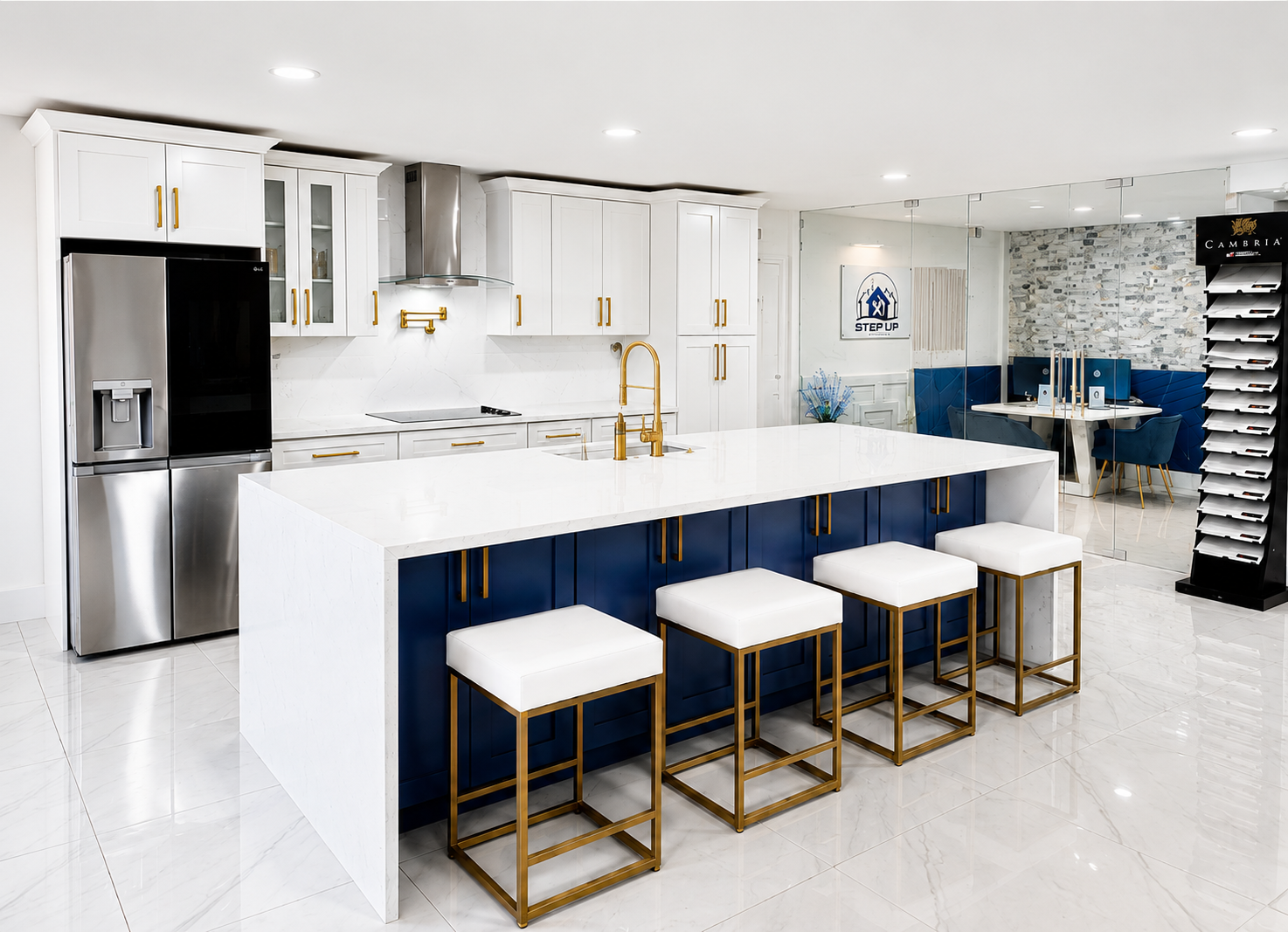
Once mechanical work is completed and inspected, finishes follow in a specific order: drywall and ceiling work, then flooring installation, then cabinetry and fixtures, then painting and trim. In units with soffit modifications or recessed lighting added to existing concrete ceilings, the sequencing also involves electrical rough-in before any ceiling surface is closed. After completion, you'll notice a unit that functions as a cohesive interior rather than a collection of upgrades applied at different times — consistent flooring throughout, updated lighting that matches fixture placement, and kitchen and bathroom finishes that reflect current material standards rather than what was available twenty years ago.
Material selection is handled with delivery logistics in mind. High-rise buildings with freight elevator access windows and no-staging policies in common areas require that materials be ordered, stored, and moved in coordination with building management schedules — large format tile, cabinetry, and appliances all require advance planning for how they enter the building and reach the unit floor.
Common Questions About Condo Remodeling Work
Condo remodeling involves rules and logistics that standard home renovation does not. The questions below reflect what owners in St. Petersburg buildings typically need to understand before work begins.
Does condo remodeling require association approval?
Yes, many condo associations require approval before remodeling begins. Step Up Home Improvements can help identify building requirements and coordinate with property management.
Can you remodel plumbing in a condo?
Yes, plumbing updates are often possible, depending on building restrictions. Relocating fixtures or modifying shared plumbing may require permits and association approval.
How long does a full condo remodel take?
Timelines depend on the project scope, material availability, and required approvals. Step Up coordinates trades and scheduling to help keep your renovation on track.
Can flooring be replaced in high-rise condos?
Yes, provided the flooring meets building requirements. Some associations require specific
materials or soundproofing underlayment to minimize noise between units.
What approvals are typically needed?
Requirements may include condo association approval, building management authorization, contractor documentation, and permits for applicable construction work.
How are deliveries handled during a condo remodel?
Deliveries may require scheduled service elevator access, designated loading areas, and approved delivery hours. Step Up coordinates deliveries around applicable building rules.
Can ceilings and soffits be modified in a condo?
Yes, in some cases. Changes depend on structural components, plumbing, electrical wiring, and HVAC systems, as well as any required approvals.
Does Step Up coordinate trades and inspections?
Step Up coordinates the trades involved in your renovation and helps manage scheduling, permitting, and applicable inspections to keep the project organized.
Step Up Home Improvements manages the full scope of condo remodeling in St. Petersburg, from the initial association submittal through final inspection and punch list. To review your unit's specific renovation scope and building requirements, arrange a consultation before finalizing your material selections.