
How to Choose the Best Kitchen Remodeling Contractor in Tampa, FL
Choosing the wrong kitchen contractor in Tampa does not just mean delays — it can mean unpermitted work that fails a resale inspection, materials that warp in Florida's heat and humidity, and money spent twice to fix what was done wrong the first time. If you are actively comparing contractors right now, the framework below will help you separate qualified remodelers from generalists and make a confident hiring decision.
Why Florida Licensing Is the First Thing You Check
A licensed Florida kitchen contractor has passed trade exams, carries required insurance, and is accountable to the state — an unlicensed one offers none of those protections.
Florida requires contractors to be licensed through the Department of Business and Professional Regulation (DBPR). The two statewide license types relevant to kitchen remodels are Certified General Contractor and Certified Building Contractor. Some contractors hold a Registered Contractor license, which is valid only in the county or municipality that issued it — important to confirm if your project is in the City of Tampa versus unincorporated Hillsborough County.
You can verify any license at myfloridalicense.com by searching the contractor's name, license number, or company. Look for active status, no disciplinary actions, and the correct license classification. Any contractor who cannot give you a license number — or discourages you from checking — is a clear sign to move on.
Kitchen remodels that involve moving walls, relocating plumbing, or adding electrical circuits require licensed trade subcontractors at minimum. A qualified general contractor coordinates those licensed subs and takes full responsibility for the project.
Who Pulls the Permits — and Why It Matters
In Florida, the licensed contractor of record is responsible for pulling permits, not the homeowner — so if something goes wrong, the accountability is clear.
Tampa kitchen remodels that involve layout changes, plumbing relocation, or new circuits require permits through the City of Tampa or Hillsborough County depending on your address. Permits mean a municipal inspector reviews the work at key stages, confirming it meets Florida Building Code. That inspection record protects you at resale, protects your homeowner's insurance coverage, and protects you from liability if something fails years later.
Ask every contractor directly: 'Will you pull all required permits, and will the permit be in your license name?' The answer should always be yes without hesitation. Any contractor who suggests skipping permits to 'save time' is shifting serious legal and financial risk onto you.
What Should a Professional Remodel Process Look Like?
A qualified Tampa kitchen contractor can walk you through the full project sequence before you sign — and that ability to explain the process is itself a sign of competence.
A structured remodel typically follows this path: initial consultation and site visit, a 3D design session where you see cabinet layouts and countertop selections before demolition starts, a detailed written proposal with materials specified by brand and finish, permit application, demolition and rough-in inspections, cabinetry installation, countertop templating and install, backsplash and tile, finish work including fixtures and appliances, and a final walkthrough with the permit closed out. Each step builds on the one before — countertops are templated after cabinets are set, backsplash goes in after countertops, so nothing has to be redone.
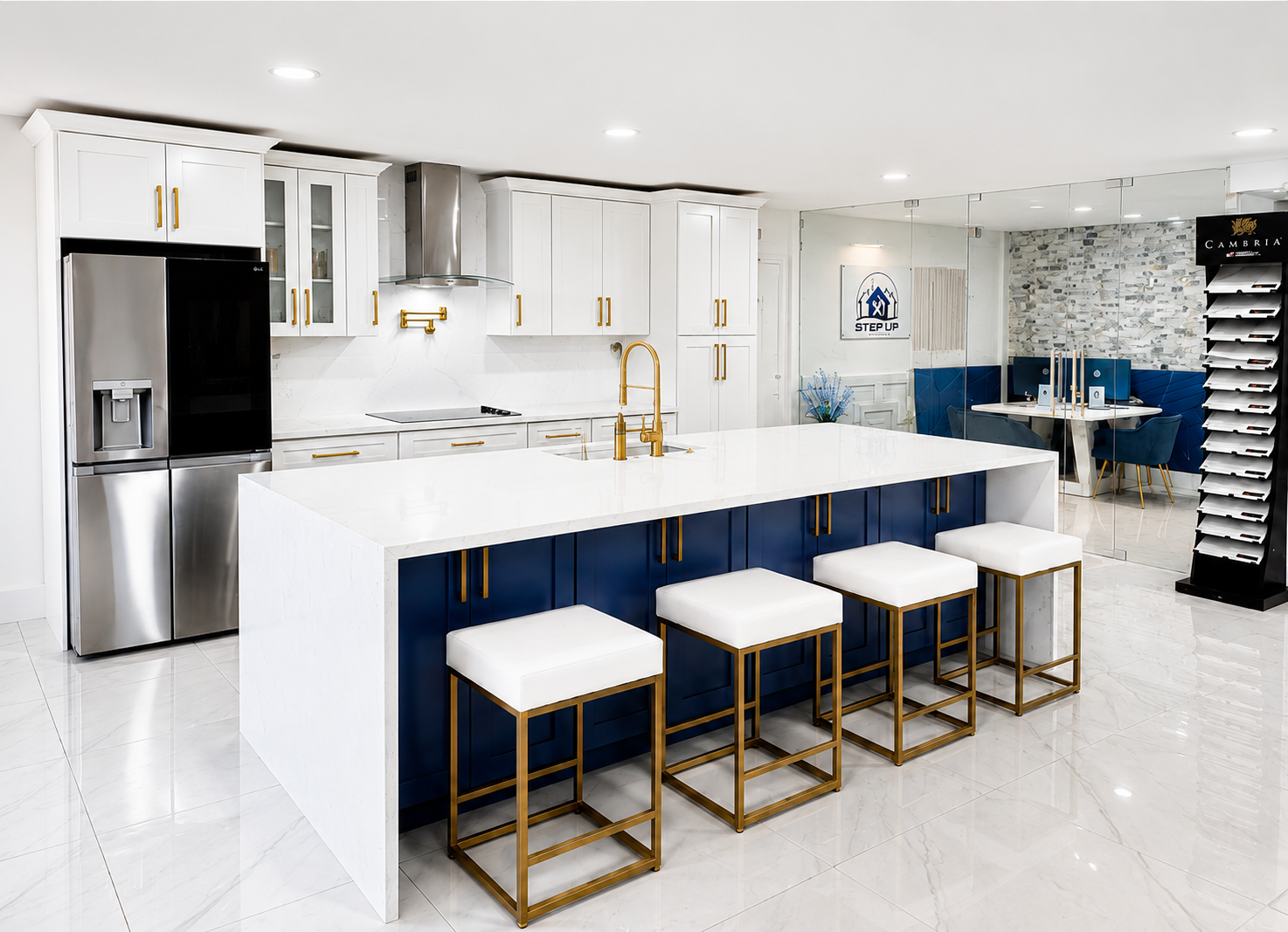
You can explore Tampa kitchen remodel examples to see what this process produces in finished projects. Seeing real completed work tells you more than any sales conversation.
Tampa-Specific Factors That Affect Material and Contractor Choice
Tampa's humidity, heat cycling, and HOA communities create conditions that affect which materials last and which contractors are actually prepared to work here.
Cabinet boxes built from plywood hold up in high humidity; particleboard swells and delaminates over time in Florida kitchens — especially near exterior walls. Countertop stone sealants vary in porosity performance in subtropical climates, and grout in high-moisture zones should be mold-resistant. A contractor who cannot explain why they specify certain materials for Tampa's climate is working from a generic national playbook, not local experience.
Many Tampa-area communities — including neighborhoods in New Tampa and South Tampa with deed restrictions — require HOA architectural review before permits are submitted. A contractor familiar with this process will flag it early and help you navigate approval timing so it does not delay your project start. If your remodel involves any window or exterior wall changes, Florida Building Code wind load requirements also apply — a licensed contractor knows this automatically.
Questions to Ask and Red Flags to Watch For
Going into your estimates prepared with specific questions separates a careful homeowner from one who gets talked into a bad contract.
Ask each contractor for their DBPR license number, proof of general liability and workers' comp insurance, confirmation that they will pull all permits, and a clear answer on whether labor is in-house or subcontracted — and whether those subs are licensed and insured. Ask about their payment schedule: industry standard is a deposit at signing (typically 10–30%) with draws tied to project milestones, and a final payment at project completion. A contractor demanding 50% or more upfront before work begins is a significant warning sign.
Your written contract should include a line-item scope of work, materials specified by brand and finish, start and projected completion dates, a change order process, warranty terms on labor and materials, and who is responsible for permits. A verbal-only agreement offers you no protection if the scope is disputed later.
- Cannot provide a Florida DBPR license number
- Suggests skipping permits to save time or money
- Demands more than 30–40% upfront before work begins
- No written contract or resists putting scope in writing
- Significantly underbids all other estimates — materials or labor will be cut somewhere
- Vague timeline with no milestone structure
- Cannot name or confirm credentials of their subcontractors
A contractor who can answer every question clearly, provide documentation without hesitation, and explain their material choices for Tampa's climate is demonstrating exactly the kind of project management maturity that protects your investment from start to finish.
Working with a contractor who handles kitchen remodeling, luxury home renovations, custom cabinetry, and countertops and backsplashes under one point of contact eliminates the coordination risk that comes from managing multiple separate vendors.
Using this framework — license verification, permit transparency, written contract, milestone payments, and Tampa-specific material questions — puts you in a position to hire with confidence rather than hope.
Schedule a consultation with Step Up Home Improvements, LLC to walk through your project scope, see 3D design options for your kitchen, and get a detailed written proposal you can evaluate on every point above.